
🧅
Izzat Amanuel
Illustration
If one is to understand the mechanics of self-hate, one must first understand hate itself. Is it a primary emotion, or does it merely extend from emotions? Do we feel hate in the same way we feel anger, love or fear?
In trying to understand hate, I realized that I have often mistaken it for anger, using the two interchangeably. Yet this is an important distinction: hate is not synonymous with anger. Like fear or shame, anger is instinctive and immediate; hate is more deliberate.
Hate is not synonymous with dislike.
“Dislike” is preference: it is situational and flexible. “Hate” is a far deeper emotional response, and rarely a single, conscious reaction. It takes root in the depths of our subconscious and begins to emerge as our minds organize repeated emotional reactions into more instinctive stances and interpretations of the world. It behaves less like emotion and more like a belief system. Take our relationship with our bullies, for example: we are wounded by them for a single offense but wounds heal. When there are repeated offences however—with every injustice and humiliation that goes unanswered over time, our wounds are unable to heal. They remain open and they fester, sensitive to the slightest touch. The bully becomes the face of something more permanent, the embodiment of injustice and the world’s indifference to our suffering. Each encounter thereafter is colored by these experiences, we instinctively protect ourselves at the first sign of danger.
Hate emerges as a sustained response—one that reflects not only how we experience others, but how we understand ourselves. It reduces inner conflict by simplifying ambiguity and complexity into feelings of certainty. It often also brings with it a sense of belonging and moral clarity.
Feelings of shame, humiliation, and powerlessness are difficult to process; they often indicate something about us we are not ready to face. Hate helps us externalize them. In some ways it is sorrow, come clad in armor, calling itself strength—a way to redirect our vulnerabilities, confusion, and internal distress into a sense of direction and clarity. Pain seeks explanation, and hate can offer one.
In doing this, our minds often rely on projection and othering—the psychological act of identifying a person or group as fundamentally incompatible or morally opposed to the self. Othering helps us sharpen our own identity: we may not know who we are, but we know who or what we are not.
Hate is often a reaction to perceived threat.
When we encounter individuals or things we associate with danger, unfairness, or otherness, our brain releases stress hormones like adrenaline or cortisol and prepares us to act or react. This triggers a fight or flight response and puts us in an alert mode, pushing us to reject, avoid, remove, or eliminate the target of our hate. Its true power, though, lies in the fact that it persists long after the threat has passed. Interwoven into identity and belief, it needs no constant stimulus from our environment—it sustains itself.
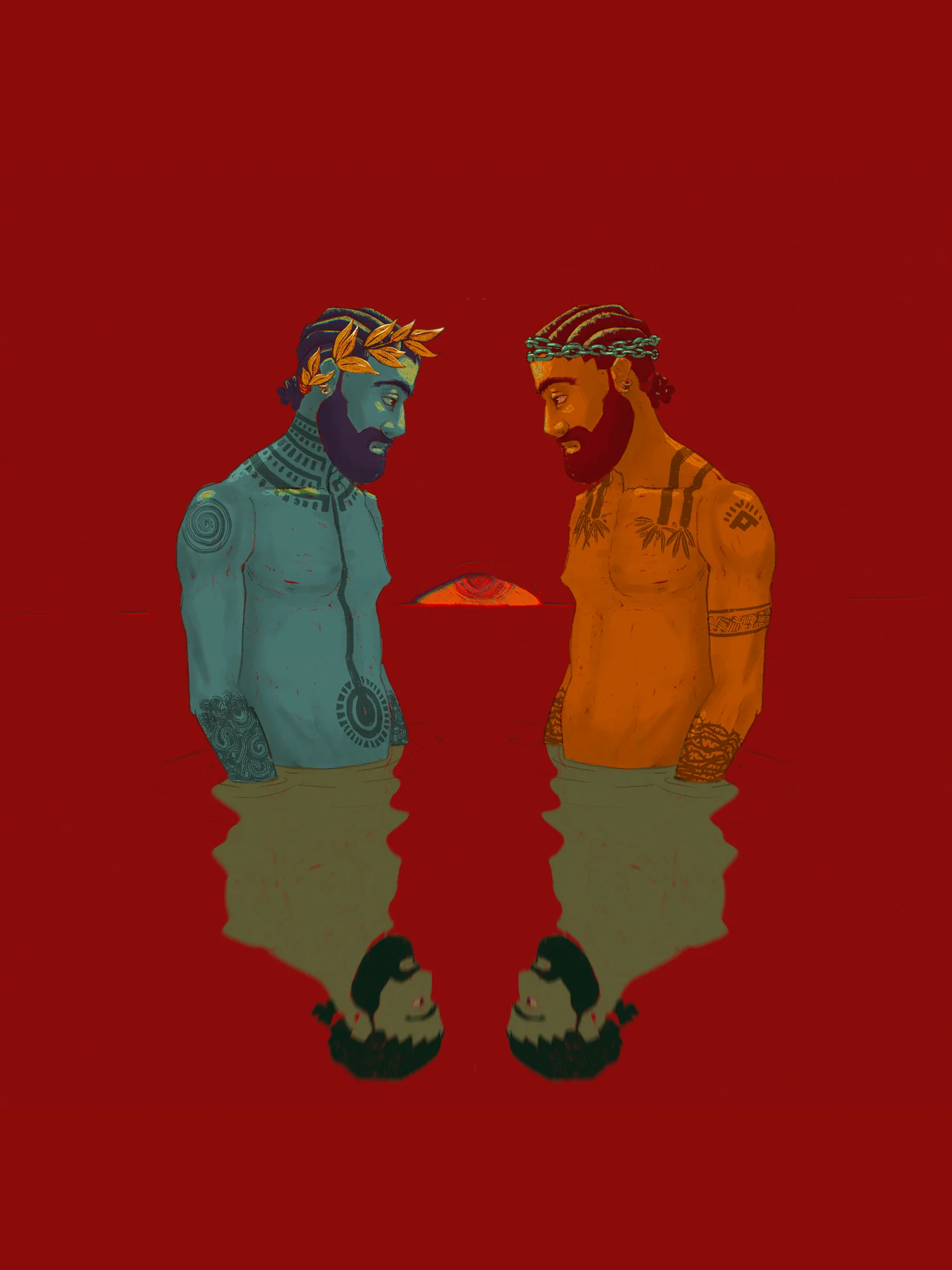
In the same way, self-hate can function as a distorted inner system of judgment.
Projection is the process of disowning parts of us and finding them in others. It works—until it doesn’t. What happens when our hate doesn’t have an external target to project onto? What happens when we turn hate inwards? Do we begin to see our failures and mistakes not as something momentary and malleable, but as proof that our whole self is flawed? Do we reject certain parts of ourselves as “other than”—the same way we do with other people? Do we direct this mechanism inwards?
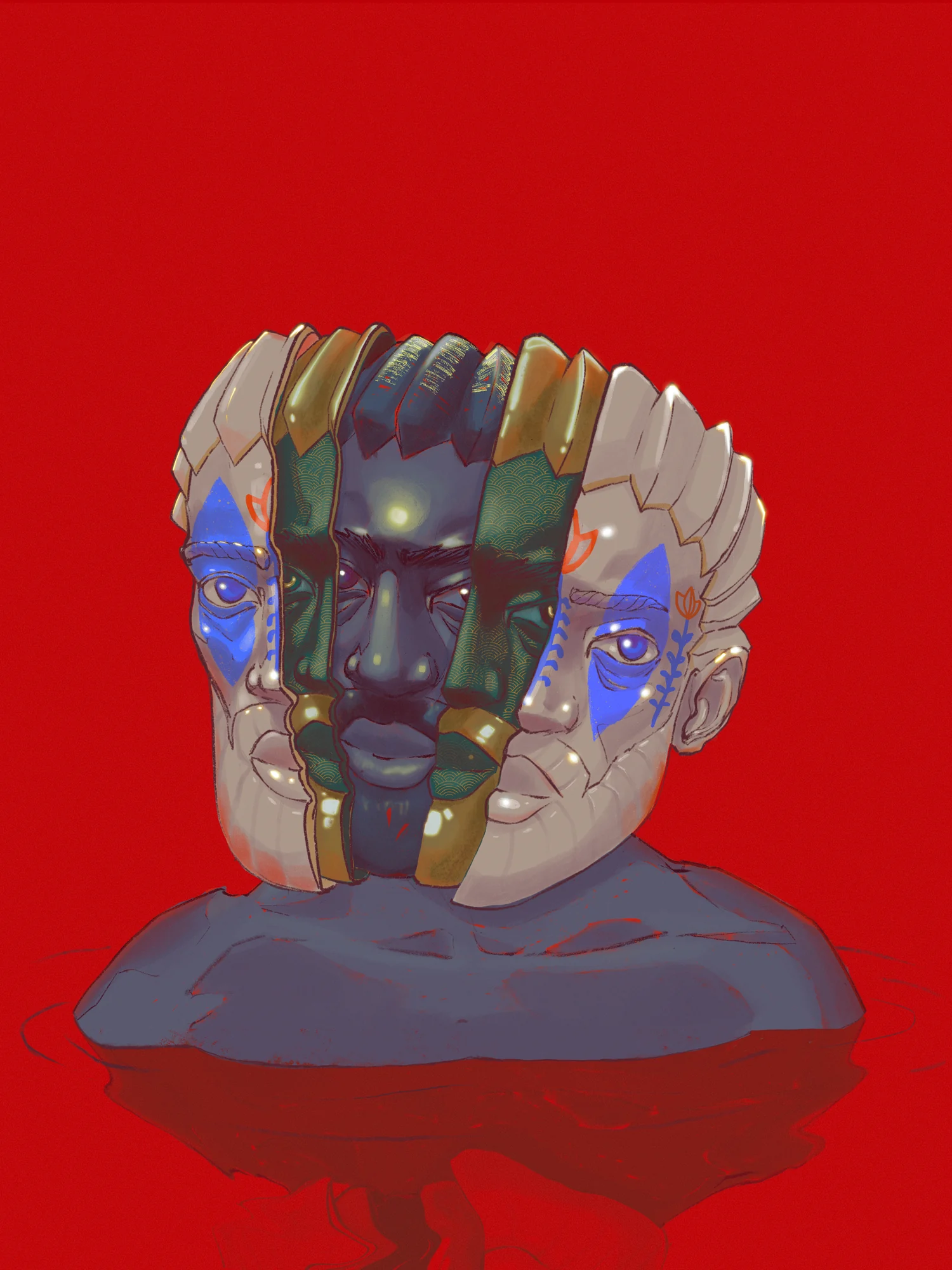
Self-hate teaches a part of us that weakness, need or humiliation are unacceptable and works to suppress them in the name of protection. We begin dividing ourselves into parts. One part becomes the “good” self—the moral authority, the self that judges. The remaining part becomes the “other” self—the shameful and flawed part of us that is judged, rejected, and attacked.
Self-hate is a wounded relationship to our sense of self-worth; it can appear as perfectionism, harsh comparison, and self-sabotage. Feelings of vulnerability attach to feelings of contempt. The voice that tells us, “I did a bad thing” starts instead to tell us, “I am bad” or “part of me is bad.” Self-hate is not simply disliking ourselves; it is a learned mode of relating to ourselves with contempt, distrust, and punishment. It leaves us no room for growth, or learning, registering our failures as confirmation of our negative self image rather than experiences that can be built upon.
Our environment, upbringing and culture shape our experience. Considering this, is our outward behaviour then a reflection of how we act inwardly, or is it the opposite that holds true? How do we distinguish what is instinct and what is learned behaviour? And how much control do we have on what feeds our moral framework? Do we choose our values or do we passively inherit them?


About the contributor
Izzat Haile is a visual artist and illustrator. His work explores the intersection between identity, culture and history.